A continual theme in the journal has been to construct practice-based activities in photography. In parallel, the approaches of acclaimed Japanese photographer Hiroshi Sugimoto (b. 1948) have served as a point in which to deconstruct conceptual art, and reframe it in a design thinking context. This is particularly true in the case of analysing Seascapes back in 2020. The goal then was to interact with the composition for a more tactile purpose.
Read More


Journal
The journal is a platform to publish our research studies on design, photography or an intersection of both.
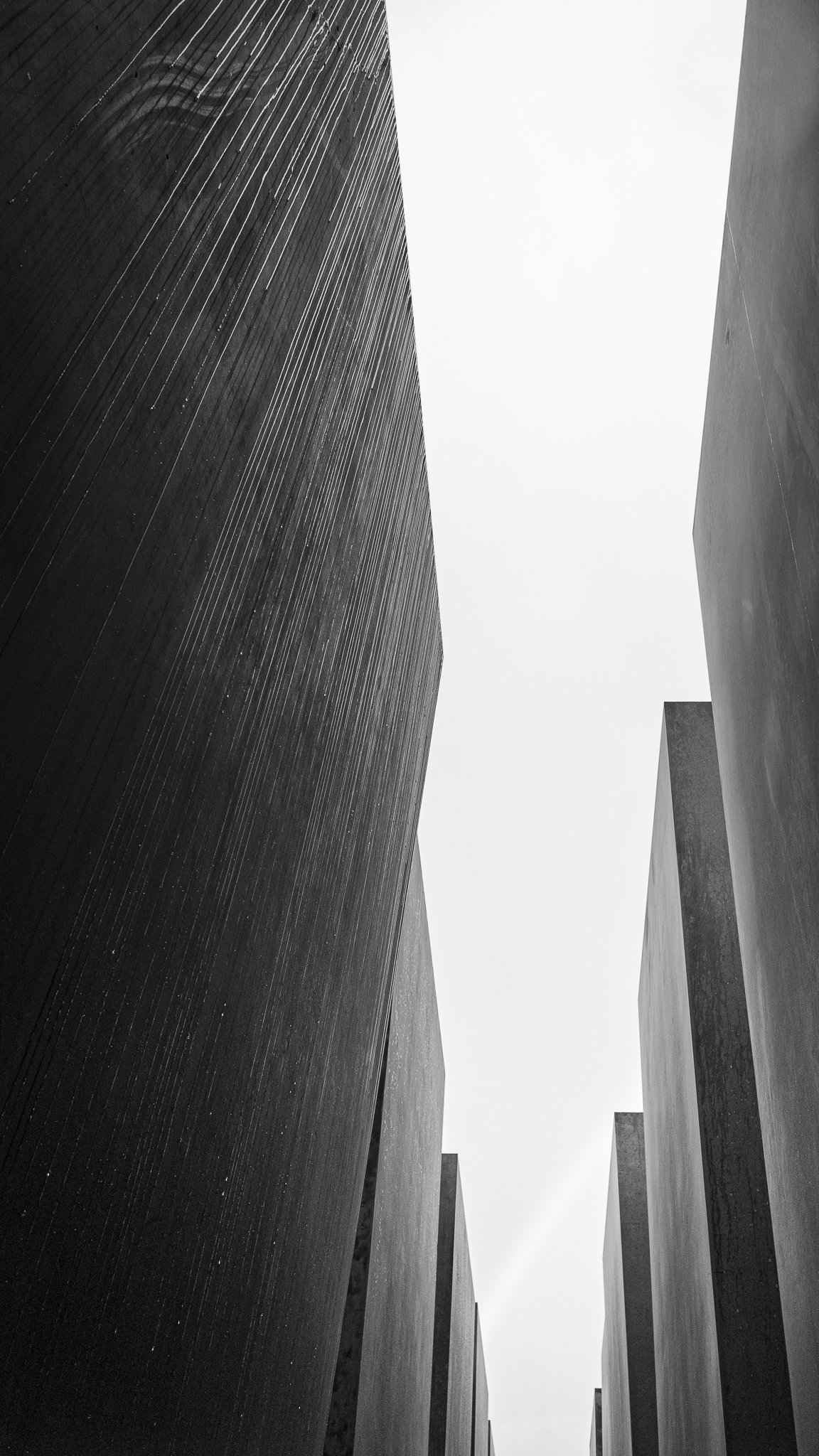
A major undertaking in 2022 was the project Denkmal für die ermordeten Juden Europas. The spatial interaction of the memorial has inspired interest for several years. The journal post in 2020 provided a starting point for a more thorough research study; which later informed the photographic research project. This became a case study to demonstrate the value of design thinking in contemporary photography practice. While photographing the memorial in Berlin, another installation became a companion piece for both the project itself, and an illustration of the design thinking approach: The sculpture Berlin Junction (1987) by Richard Serra (b. 1938).
Read MoreDesign Thinking
Insights into real-world applications of design thinking.
Design thinking has matured into a qualitative process to tackle what Buchanan (1992) calls: “wicked problems”. Extending beyond the creative sphere, design thinking is now a valid method for government strategy, educational reform and corporate structure (Fyffe & Lee, 2016). Using a human-centred approach (Brown, 2009), design thinking democratises creativity beyond professional practices, allowing anyone to fulfil their potential (Kelley and Kelley, 2013). But can a mindset, or creative process be quantified? And how can it lend weight to existing methods?
Design thinking is described by Tim Brown as “a human-centred approach” to the creative process. It is a holistic interaction between ‘designer’ and client — which moves away from short-sighted needs and defined roles. But what happens when the lines between designer and client begin to blur in practice? Does the process fall down? Or can the encounter based on commission evolve into one of collaboration?
Interaction of…
Case studies of creative play in photography.
A continual theme in the journal has been to construct practice-based activities in photography. In parallel, the approaches of acclaimed Japanese photographer Hiroshi Sugimoto (b. 1948) have served as a point in which to deconstruct conceptual art, and reframe it in a design thinking context. This is particularly true in the case of analysing Seascapes back in 2020. The goal then was to interact with the composition for a more tactile purpose.
A major undertaking in 2022 was the project Denkmal für die ermordeten Juden Europas. The spatial interaction of the memorial has inspired interest for several years. The journal post in 2020 provided a starting point for a more thorough research study; which later informed the photographic research project. This became a case study to demonstrate the value of design thinking in contemporary photography practice. While photographing the memorial in Berlin, another installation became a companion piece for both the project itself, and an illustration of the design thinking approach: The sculpture Berlin Junction (1987) by Richard Serra (b. 1938).
For more than forty years, Japanese photographer Hiroshi Sugimoto (b. 1948) has photographed a simple composition. The centre of the frame aligns with the horizon to create a 50-50 division of sky and sea, or in Sugimoto’s words: “air and water”. The title for this series of works is Seascapes. His original concept behind the minimalist aesthetic was to share the same view with the early stages of mankind. To have a comparative view to our ancestors; he concluded that the image we can relate to looks out to the horizon. Elena Cué describes his work as: “a constant reflection about the origin and history of the world and of our culture, where concepts like space and time are explored expanding our ways of perception.” (Cué, 2016). The composition is synonymous with Sugimoto. But is it original? And can the same aesthetic be utilised for a different purpose?
The unforeseen events of 2020 have given people, particularly in the Western world, a limit to spatial freedom that has not been experienced before. A period of self-confinement has impacted on professional, and personal lifestyles unbeknown to many in recent history. While at times frustrating, it has offered a period of self-reflection. From a creative perspective, the lack of opportunity to produce new work has provided time to look back and reconsider experiences that may at one point have been taken for granted.